Tehran, Minsk explore co-op opportunities in oil, petchem sectors
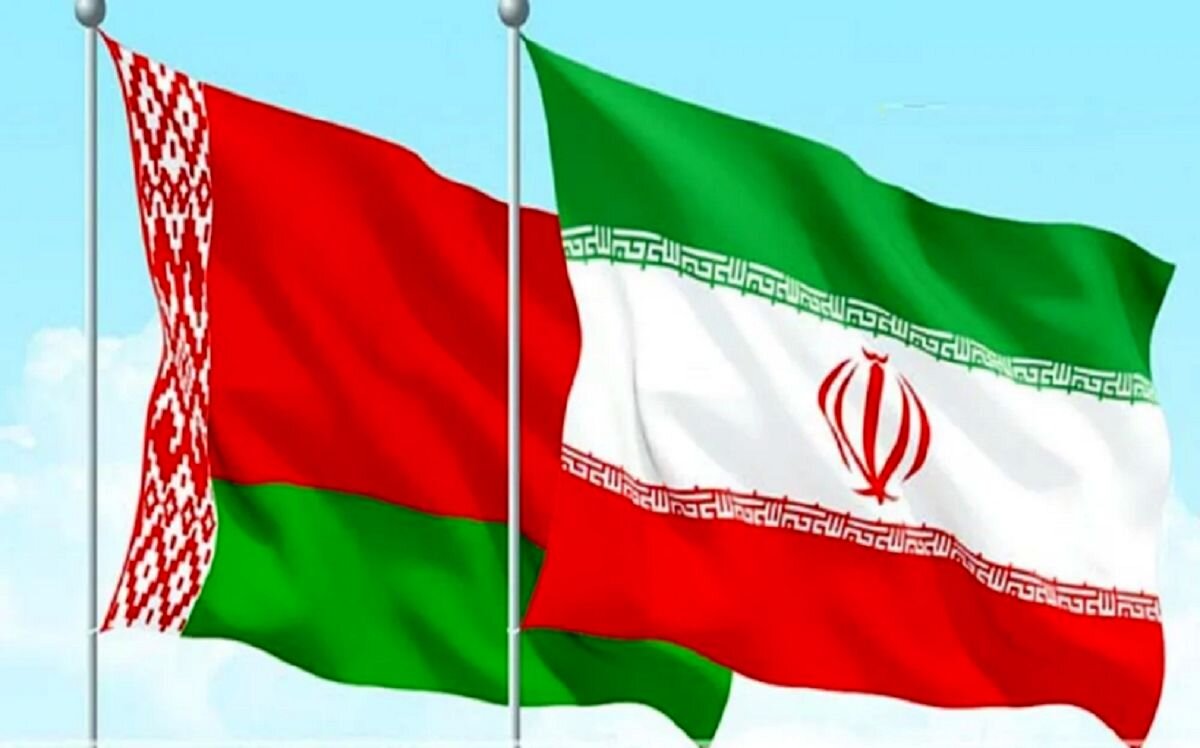
TEHRAN- Opportunities and capacities for cooperation between Iran and Belarus were discussed in the third session of the two countries' oil industry working group, which was held virtually, with the aim of following up and implementing the bilateral oil memorandum of understanding signed between Iran’s Oil Ministry and Belarus' Belneftekhim (an association of petrochemical companies in Belarus, subordinated to the Council of Ministers).
Referring to the recent meeting between Iranian Oil Minister Mohsen Paknejad and Belarusian Industry Minister Andrei Kuznetsov on the sidelines of the18th meeting of the two countries’ Joint Economic Committee (on December 9) and the emphasis of both sides on expanding cooperation, especially in the energy sector, the session explored opportunities and capacities for cooperation between the two countries.
Areas of cooperation in the trade of petrochemical and oil products, the export of catalysts to Belarus, cooperation in technical and engineering services, and the supply of oil industry equipment were the main topics of discussion in this session.
Both sides emphasized the high level of political relations between Iran and Belarus and stressed the need to expand cooperation, particularly with the participation of private companies—a move that could lead to an increase in the volume of trade exchanges between the two countries.
Representatives from the National Petrochemical Company, the National Iranian Oil Refining and Distribution Company, Persian Gulf Holding, Ghadir Investment Holding, Sanat Trade Company, the Commodity Management Department of the National Iranian Oil Company, Tabriz, Karun, and Takht-e Jamshid Petrochemical Companies, as well as the Iranian Association of Oil Industry Equipment Manufacturers, along with representatives from relevant Belarusian sectors and Alireza Sanei, Ambassador of Iran in Minsk, attended the session and exchanged views.
The Iranian delegation was headed by Mostafa Barzegar, Director General of Europe, America, and Commonwealth of Independent States at the International Affairs and Commerce Deputy of the Oil Ministry, while the Belarusian delegation was headed by Igor Fomin, Head of the Foreign Trade Department of Belneftekhim.
On December 10, Iran’s agriculture minister and Belarus’ industry minister agreed to expand cooperation across farming, forestry, veterinary services, and plant and animal quarantine, with commitments to jointly produce agricultural machinery and potash fertilizer.
The two sides reached an understanding for Iran to supply part of Belarus’ food needs, while Minsk will export agricultural raw materials required by Tehran.
Agriculture Minister Gholamreza Nouri Ghezeljeh and Belarusian Industry Minister Andrei Kuznetsov described the agreements as a practical step toward deeper economic cooperation, citing complementary strengths in both countries.
Iran also signaled its readiness to facilitate the transit of Belarusian agricultural products to other markets.
A key outcome of the meeting was an agreement to launch joint production of potash fertilizer in Iran. Under the plan, Belarus will supply part of the potassium feedstock, while portions of the processing chain will be carried out domestically.
The sides also agreed to pursue the supply and joint manufacturing of heavy agricultural equipment, including tractors, combines, trucks and heavy-load haulers, in cooperation with Iranian firms such as Iran Tractor Manufacturing Company.
Officials said the initiatives are expected to strengthen food security and support agricultural development in both countries.
In another meeting with Kuznetsov, Iran’s first vice president said that the country has no restrictions on expanding ties with Belarus, highlighting what he called the complementary nature of the two economies and their capacity to meet each other’s needs, the presidential office said on Wednesday.
Mohammadreza Aref said deepening cooperation across various sectors is a strategic priority for Tehran given the strong political relationship between the two states. He added that the successful conclusion of the eighteenth session of the joint economic committee has created fresh momentum for broadening bilateral engagement.
Aref noted that Iran and Belarus share close positions in international forums and participate together in several regional organizations, arguing that these alignments require both sides to continue strengthening and expanding cooperation. He called for higher levels of trade and economic exchanges through an empowered joint committee mechanism.
Referring to the Iranian president’s recent visit to Minsk, Aref said high-level contacts — including his own bilateral meeting with the Belarusian prime minister on the sidelines of the Shanghai Cooperation Organization summit — play an important role in elevating economic collaboration.
He stressed that the private sector in both countries can drive growth in bilateral commerce and urged Tehran and Minsk to encourage business communities to expand their engagement, particularly in light of the free trade agreement between Iran and the Eurasian Economic Union.
On December 9, the eighteenth session of the Iran-Belarus Joint Economic Committee meeting convened in Tehran, bringing together senior ministers, business representatives and experts from both countries to outline a new phase of commercial, industrial and scientific collaboration.
The meeting was co-chaired by the two countries’ industry ministers.
Speaking at the session, Iranian Industry, Mining and Trade Minister Mohammad Atabak said the committee is expected to produce substantive agreements that will broaden cooperation across economic, commercial, scientific, cultural and investment fields.
He said the implementation of the free trade agreement between the Islamic Republic and the Eurasian Economic Union (EAEU), along with plans for a special economic zone, represents “a turning point” in the commercial and industrial history of member states.
Atabak added that these arrangements give national policymakers and private-sector actors a wider platform to pursue long-term economic development and to deepen regional engagement.
The minister highlighted plans to reinforce legal frameworks, expand university-level scientific cooperation and support business-to-business engagement with Belarus. Years of political and economic interaction—including sector-specific working groups and high-level visits—have helped create conditions for broader joint projects across industry, science, culture and trade.
According to Atabak, the formation of dedicated working groups in industrial, health, medical and agricultural sectors has enabled companies in both countries to advance practical cooperation.
He said the two governments aim to raise bilateral trade volumes in line with their economic capacities and complementary strengths.
Atabak noted that banking problems, letters of credit and transit issues for drivers must be resolved quickly to facilitate predictable and efficient trade. He called on private-sector representatives to intensify efforts to understand each other’s markets and build long-term commercial partnerships. Establishing trade centers, exhibitions and consultative councils could accelerate this process, he said.
He also underlined the country’s strategic logistics position in West Asia, saying Belarusian firms could use southern ports as gateways to India, Africa and Southeast Asia.
Atabak said the joint session reflected the strong will of both governments to pursue comprehensive ties. He reiterated the need to resolve banking issues, improve customs and logistical links, and standardize pharmaceutical regulations under EAEU frameworks. He invited the Belarusian delegation to participate in the Eurasia Exhibition scheduled for February 1, 2026.
Belarusian Industry Minister Andrei Kuznetsov, for his part, thanked the hosts for the organization of the commission and said the presence of his delegation reflects a commitment to strengthening friendly relations. He said expert teams from both countries had contributed significantly to drafting the agreements and preparing implementation plans.
Kuznetsov said Belarus is keen to move quickly on joint agreements and to expand cooperation in economic and industrial technologies, pharmaceuticals, medical equipment, machinery, home appliances, food products and agricultural goods. He underscored the importance of establishing joint production lines, advancing pharmaceutical and medical projects, and updating investment and economic mechanisms.
The Belarusian minister identified transportation, transit corridors, scientific education and cultural tourism as priority areas for near-term action. He said academic cooperation—such as joint scientific committees and mutual recognition of degrees—will help strengthen trust and expand long-term exchanges.
Kuznetsov added that reinforcing professional, technical and educational engagement could help increase bilateral trade volumes and broaden the overall scope of cooperation.
Also, in a meeting with Head of Iran’s Trade Promotion Organization Mohammad Ali Dehghan Dehnavi, on December 8, Belarusian Ambassador to Iran Dmitry Koltsov stated: "We are seriously pursuing increased trade and economic exchanges between Iran and Belarus”.
In the mentioned meeting, the TPO head emphasized the expansion of trade cooperation between the two countries, stating: "Holding the joint committee meeting can facilitate many trade issues between the two countries."
He stressed the development of trade cooperation between the two countries, saying: "There are diverse capacities for trade exchanges between Iran and Belarus, and we strive to expand economic relations between the two countries in various fields."
Dehghan Dehnavi further listed some trade issues that would lead to the development of bilateral trade relations, expressing hope: "The joint committee meeting can facilitate many trade matters between the two countries."
The TPO head concluded by noting: "Alongside the 18th joint committee meeting of Iran and Belarus, meetings will be held between officials of the two countries, which will provide the groundwork for further cooperation."
The ambassador of Belarus to Iran, for his part, referred to the importance of the Iran-Belarus joint committee meeting, stating: "The meeting of officials from both countries in this committee is highly significant and will resolve many trade obstacles."
Dmitry Koltsov added: "After this meeting, we intend to have further meetings with the managers of Iran’s Trade Promotion Organization to follow up on the topics discussed."
Highlighting that "we are seriously pursuing increased trade and economic exchanges between Iran and Belarus”, the ambassador expressed hope that “after this meeting, we will witness good measures in expanding trade relations between the two countries."
Back in August, Belarusian Industry Minister and Co-chair of the Belarusian-Iranian Intergovernmental Commission on Economic Cooperation Andrei Kuznetsov said that Belarusian Industry Ministry places great importance on the development of mutually beneficial cooperation between Belarus and Iran.
The official told BelTA on the sidelines of the high-level talks between Belarus and Iran at the Palace of Independence in Minsk on August 20.
“We highly value the achieved level of interaction and see significant potential for further expansion of bilateral ties. The Industry Ministry is ready to offer Iranian partners a wide spectrum of opportunities for deepening our industrial partnership,” Andrei Kuznetsov said.
The minister highlighted specific areas of joint work that demonstrate a commitment to long-term and productive interaction between the two states.
For instance, the establishment of assembly production for Belarusian harvesters would integrate the technologies of the Belarusian mechanical engineering industry into Iran's economy and create a local enterprise for assembling high-quality agricultural machinery. This would reduce logistics costs and provide the local market with access to the advanced technologies of the Belarusian agricultural industrial complex. The minister noted that work in this direction has already begun.
Also during talks on expanding investment and transit cooperation, officials from the two countries said that Belarus could gain access to open waters via Iran’s free trade zones.
Alena Perminova, head of Belarus’s National Agency of Investment and Privatization, met Reza Masrour, secretary of Iran’s Free and Special Economic Zones High Council, to discuss new avenues for collaboration.
Perminova said a cooperation agreement signed between her agency and Iran’s free zone secretariat was aimed at boosting joint projects.
She stressed Belarus’s interest in building partnerships with Iran’s free zones, saying the two countries could meet many of each other’s needs through investment and re-exporting goods. “We are committed to implementing the framework of this agreement and creating more opportunities for cooperation,” she said.
Perminova noted that Belarus’s free trade zones were established to stimulate provincial development and commercial dynamism, and added that Minsk was ready to pursue serious joint projects with Tehran.
Masrour said Belarus could use Iran’s ports to bypass its landlocked geography and sanctions-related restrictions.
He cited the Caspian route from Makhachkala in Russia to Iran’s Caspian Port as a corridor that could provide Belarus with maritime access. In return, he said Belarus could enhance Iran’s entry into the Eurasian Economic Union’s 180-million-strong market.
“Both Iran and Belarus face unjust economic sanctions,” Masrour said, adding that the measures had restricted Belarus’s traditional access to Baltic ports in Lithuania and Latvia. “Iranian ports can serve as an alternative.”
The official also pointed to Iran’s role in the International North–South Transport Corridor (INSTC), saying Belarus could secure vital export routes for its potash fertilizers, agricultural products and other goods to Arab countries, Africa and beyond via Iranian free zones.
The talks also covered cooperation in tourism, high-tech industries, the digital economy, logistics, and organizing joint investment exhibitions.
MA
Leave a Comment